
Article
Holding Together by Design: Federalism, Subsidiarity, and the Architecture of Local Self-Governance in India
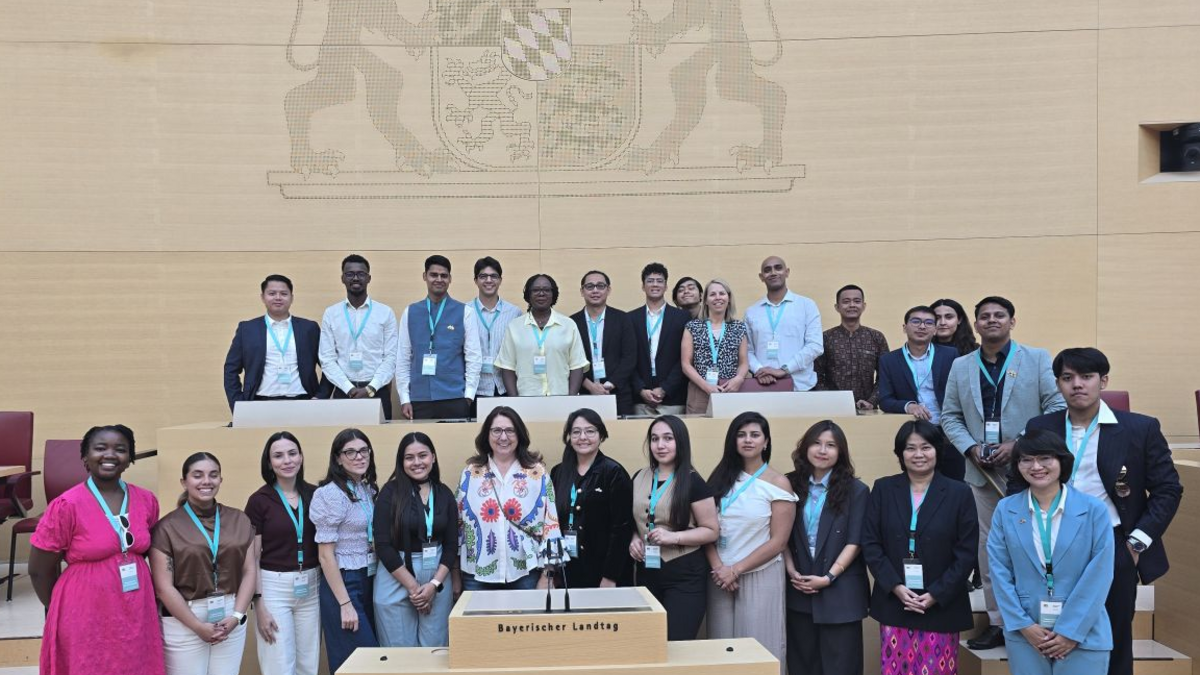
Visit to the Bavarian State Parliament
Governments rarely surrender political authority out of technocratic enthusiasm for efficiency. Central states devolve jurisdiction, taxation, or discretion to subnational tiers when structural imperatives compel them, when deep societal division, economic transformation, or demands for self-determination require it. Decentralization is thus not merely a managerial tool but an institutional bargain designed to preserve state stability, accommodate diversity, and deepen democratic legitimacy. For India, one of the world's most durable federal democracies, examining local self-governance through comparative theory illuminates both the sophistication of its constitutional design and pathways for its continued evolution.
Comparative Theories of Federalism: Bargaining, Holding-Together, and Polycentricity
Comparative theory holds that a state's vertical division of power reflects the conditions of its formation. Riker (1964) conceptualized federalism as a rational bargain between central and subnational elites, driven by collective defense and a unified market. Stepan (1999) distinguished "coming-together" federations, such as the United States, where sovereign units pooled authority while retaining autonomy, from "holding-together" federations, where a dominant central authority devolves power downward to forestall fragmentation and preserve unity. Here decentralization manages conflict rather than concedes weakness. Post-conflict designs in Bosnia and Herzegovina, Kosovo, and North Macedonia show how regional autonomy links elite power-sharing at the center with local self-rule, stabilizing fragile settlements.
Germany offers an instructive variant, tied to the intellectual origins of subsidiarity. The Basic Law (Grundgesetz) constructs a cooperative federal order in which the Länder retain substantial legislative and administrative competence, the Bundesrat gives them a direct voice in federal lawmaking, and joint-task arrangements (Gemeinschaftsaufgaben) formalize coordination between tiers. Fiscal equalization among Länder, though periodically contested, remains a constitutionally anchored mechanism ensuring decentralization does not mean regional abandonment. Germany shows subsidiarity, properly institutionalized, requires not just devolved authority but durable channels for intergovernmental bargaining.
South Africa's post-apartheid constitution offers a further reference point, explicit about cooperative governance as a constitutional principle. Chapter 3 of the 1996 Constitution obliges national, provincial, and local government to coordinate, avoid legal disputes, and exhaust intergovernmental remedies before resorting to courts. Ethiopia's ethnic-federal model illustrates the opposite risk: a structure organized around ethnic-linguistic boundaries, absent robust mechanisms for intergovernmental dialogue, has at times sharpened rather than dissolved the cleavages it was designed to manage (Fessha and Van der Beken, 2013).
A complementary strand of theory addresses the internal texture of self-governance. Ostrom's (1990) polycentric governance framework holds that complex societies govern common resources most effectively when authority is distributed across multiple, overlapping centers rather than one hierarchy. Local institutions are not passive conduits for central directives but self-organizing arenas producing context-specific solutions. Underlying both perspectives is subsidiarity: the principle, central to European federalist thought and codified in Article 5 of the Treaty on European Union, that functions should be discharged at the most immediate competent level, with higher tiers intervening only to support local capacity. It reframes decentralization as authority restored to its natural, legitimate locus. Together, these frameworks converge on one insight: dispersing authority, paired with adequate capacity and clear coordination, enhances adaptability, deepens civic trust, and fortifies democratic institutions against shocks. Where coordination is weak, decentralization alone guarantees no cohesion.
The Indian Federal Paradigm: Constitutional Adaptability and Social Deepening
India stands as one of history's most consequential examples of Stepan's holding-together typology. At independence, confronted with extraordinary linguistic, ethnic, and regional diversity, the Constitution's framers recognized that rigid central command would be unsuited to long-term cohesion. Through the linguistic reorganization of states in the 1950s, asymmetric arrangements under the Fifth and Sixth Schedules for tribal regions, and special provisions for northeastern states, Indian federalism has repeatedly used power-sharing as a tool of integration, an evolving compact continuously renegotiated to hold a plural society together. The 73rd and 74th Constitutional Amendments of 1992 extended this logic below the state level. By establishing a constitutionally mandated third tier, Panchayati Raj Institutions (PRIs) in rural India and Urban Local Bodies (ULBs) in towns and cities, India effected one of the largest expansions of grassroots democracy anywhere, relocating functions like education, infrastructure, and health closer to citizens. According to Reserve Bank of India data, PRIs today comprise more than 3.1 million elected representatives, of whom over 1.45 million, roughly 45 to 46 percent, are women (Reserve Bank of India, 2024). More than twenty states exceed the constitutional one-third floor, mandating fifty percent reservation for women, among the most gender-inclusive local councils in the world.
A defining achievement of the 1992 reforms was the institutionalization of statutory social representation. By reserving seats for women, Scheduled Castes, and Scheduled Tribes, India engineered one of the largest exercises in grassroots political inclusion globally, bringing millions from marginalized communities into public leadership. Numerical representation has not always translated into substantive decision-making: research has documented cases where formal office is held by women while budgeting influence remains exercised informally by male relatives (UN Women, 2018; WELL Labs, 2024). This gap is a reminder that institutional design requires sustained follow-through in political culture.
The architecture governing the third tier is deliberately flexible rather than uniform. State legislatures retain discretion over transferring "functions, funds, and functionaries," the so-called 3Fs, producing considerable variation in local capacity: Kerala and Karnataka have devolved substantial fiscal and administrative authority, while others proceed more cautiously. This variable geometry reflects Indian federalism's adaptive character, calibrating empowerment to differing administrative readiness across a subcontinental polity. State Finance Commissions, reviewing the fiscal relationship between states and local bodies, institutionalize this calibration, performing a function not unlike Germany's fiscal equalization, though with less uniformity.
Strengthening Intergovernmental Relations and Local Institutional Capacity
The long-term health of India's third tier depends less on further amendment than on deepening cooperative federalism, continuous dialogue among union, state, and local tiers, a principle Germany and South Africa institutionalize more explicitly than India currently does. Comparative experience suggests three priorities for this next phase.
First, fiscal subsidiarity requires strengthening not just transfers but genuine local revenue capacity. Decentralized systems function best when responsibility pairs with predictable, locally generated resources. Expanding property tax collection, enabling prudent municipal borrowing, and rationalizing user fees would complement state grants, giving local bodies agility without permanent dependence on higher-tier transfers.
Second, institutional capacity building remains the binding constraint on polycentric governance in practice. Ostrom's framework presumes local institutions with administrative competence to plan, execute, and monitor complex programs. Sustained investment in training elected representatives and officials, in financial management and regulatory compliance, is a precondition for devolution to function as intended, and for numerical inclusion to become substantive authority.
Third, deliberative local assemblies, Gram Sabhas in rural areas and Ward Committees in urban bodies, deserve renewed attention as the deliberative core of subsidiarity in practice. These forums translate constitutional entitlement into lived participation; their vitality determines whether decentralization produces genuine self-governance or merely another administrative layer.
Strengthening the regularity, transparency, and inclusiveness of these assemblies, alongside more structured intergovernmental dialogue as institutionalized in Germany's joint-task arrangements or South Africa's cooperative-governance framework, would consolidate the relationships on which India's third tier depends.
To conclude the comparative theory shows decentralization is not a singular constitutional event but a continuous process of refinement. Mature federal democracies constantly reassess the balance between central coordination and local self-rule as conditions evolve. India's federal project, forged through the holding-together imperatives of independence and deepened through the 1992 amendments, has demonstrated a distinctive capacity for constitutional adaptation in service of unity and inclusion. Its record of grassroots inclusion, most visibly well over a million elected women representatives in rural local government, stands among the more significant achievements of any decentralization program worldwide.
Continued success will depend on patient, cooperative institutional capacity building: strengthening fiscal subsidiarity, investing in local administrative competence, and nurturing the deliberative assemblies that give decentralization its democratic substance. India's experience offers not a finished model but an ongoing case study in how large, diverse democracies hold themselves together by continually redistributing the power to govern.
References
1. Fessha, Y. and Van der Beken, C. (2013). Ethnic Federalism and Internal Minorities: The Legal Protection of Internal Minorities in Ethiopia. African Journal of International and Comparative Law, 21(1), 32-49.
2. Ostrom, E. (1990). Governing the Commons: The Evolution of Institutions for Collective Action. Cambridge University Press.
3. Reserve Bank of India (2024). Report on Finances of Panchayati Raj Institutions.
4. Riker, W. H. (1964). Federalism: Origin, Operation, Significance. Little, Brown and Company.
5. Stepan, A. (1999). Federalism and Democracy: Beyond the U.S. Model. Journal of Democracy, 10(4), 19-34.
6. UN Women (2018). Women's Political Participation in Panchayati Raj Institutions: A Study.
7. WELL Labs (2024). Women's Leadership in Panchayati Raj Institutions.

About the Author:
Alok Virendra Tiwari is Senior Manager (Northern region) - Government Partnership, Strategic and Knowledge Consulting at Grassroots Research and Advocacy Movement (GRAAM), New Delhi. His research lies at the intersection of Technology, Governance and Democratic Decentralisation. He is also Research Fellow at Dr. Syama Prasad Mookerjee Research Foundation (SPMRF).
Disclaimer: The views expressed above are those of the author and do not necessarily reflect the views of Hanns Seidel Foundation.