
Press Release
National Climate Conclave 2026 Opens in New Delhi, Bringing Climate Governance Closer to the Ground
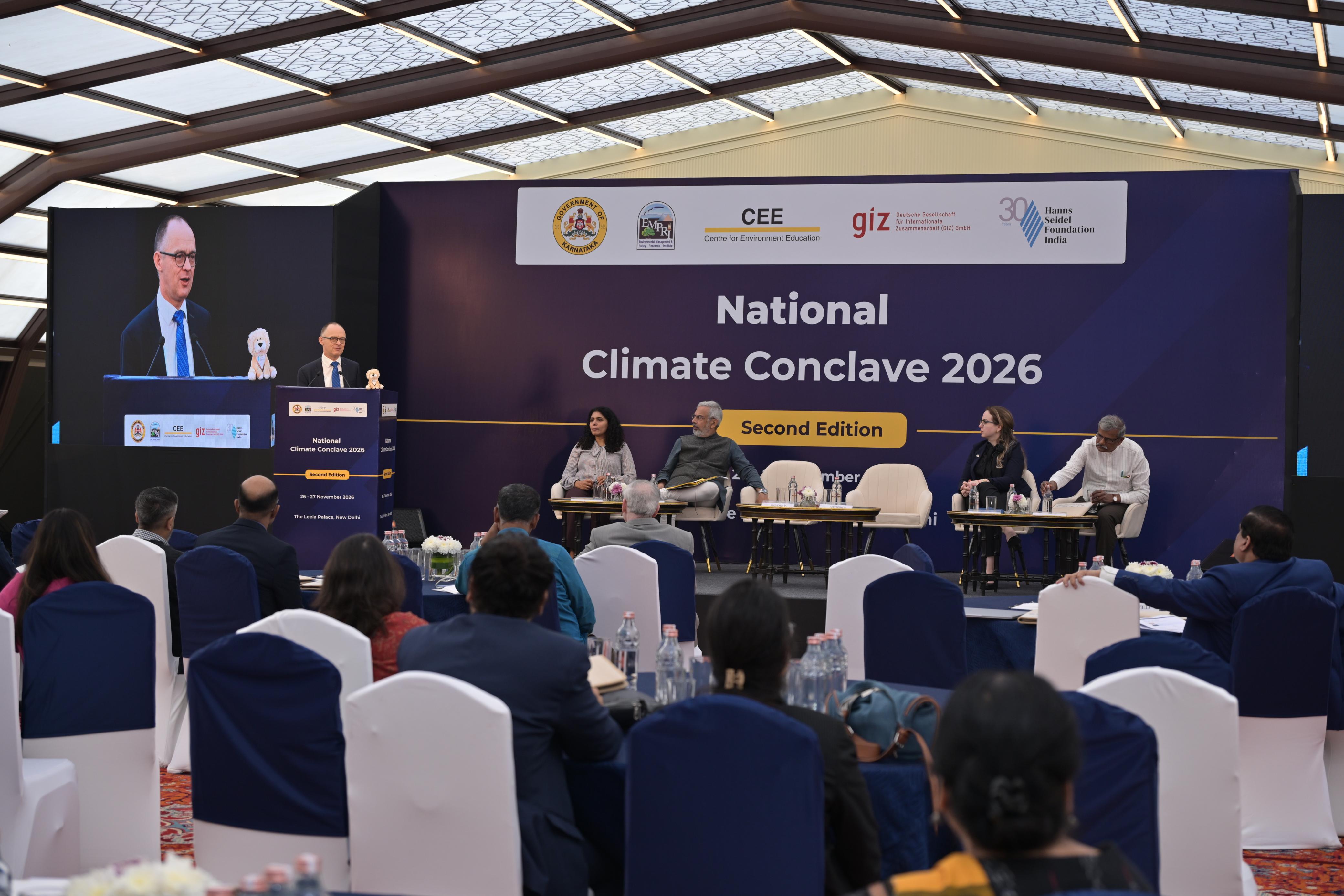
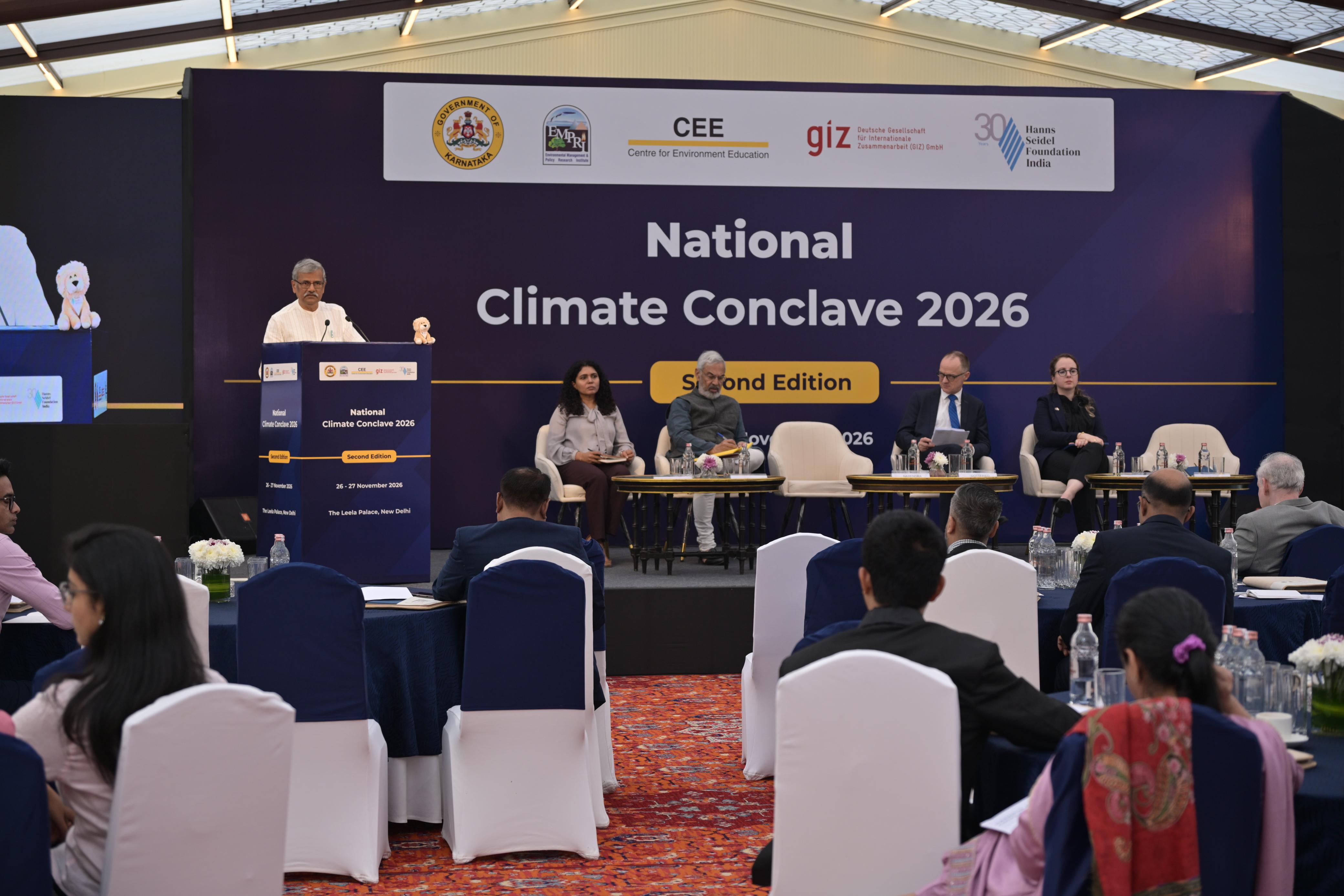
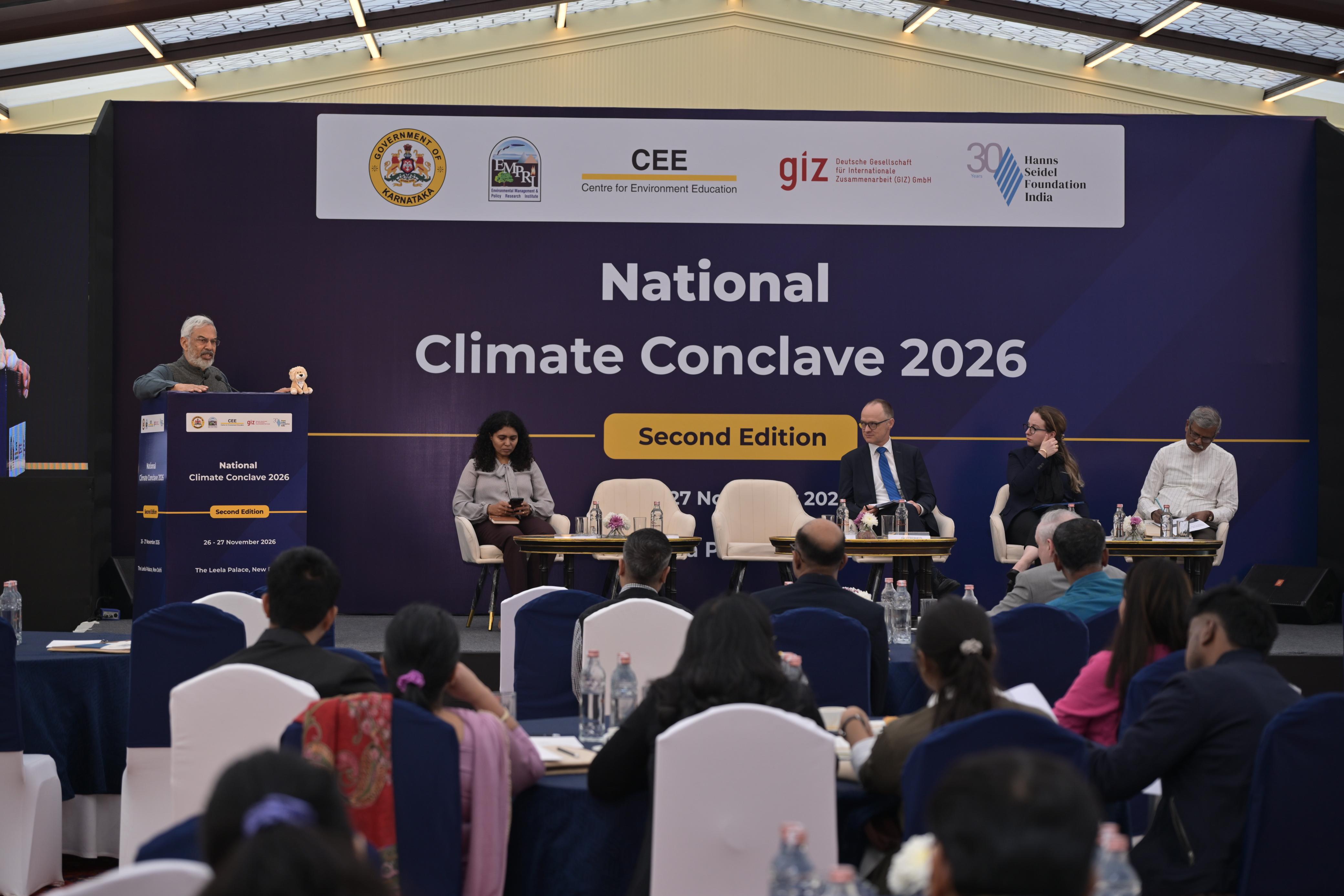
Held under the theme “Governance. Innovation. Resilience.”, the Conclave provides a platform for exchange and cooperation on translating climate commitments into tangible results. It is jointly organised by the Centre for Environment Education (CEE), the Environmental Management and Policy Research Institute (EMPRI), Government of Karnataka, the German Corporation for International Cooperation (GIZ) India and Hanns Seidel Foundation (HSF) India.
The Conclave is supported by the participation and contributions of the Ministry of Environment, Forest and Climate Change (MoEFCC) and the Department of Science and Technology (DST), Government of India; the Embassy of the Federal Republic of Germany in New Delhi; and the Khadi Board, Government of the National Capital Territory of Delhi.
The inaugural session underlined the importance of coordinated governance, interdepartmental cooperation, public participation and environmental education in addressing the growing impacts of climate change. Speakers emphasised that climate action must move beyond policy commitments and be translated into measurable outcomes at state, district and community levels.
From national policy to local implementation
The programme brings together perspectives from different levels of climate governance, with a focus on sharing practical experiences and identifying opportunities for collaboration. An Executive Dialogue on Understanding India's Climate Governance Landscape sets the policy context, while the Global Climate Connect session provides an opportunity to exchange international experiences and explore partnerships.
The State Action Showcase and District Action Showcase highlight climate initiatives and implementation experiences from across India. Further sessions address climate-smart agriculture through a series of Lightning Talks and community resilience through an Action Lab dedicated to disaster preparedness and resilience-building.
Karnataka strengthens climate planning and accountability
Karnataka's climate governance framework features prominently at the Conclave. The state's revised Climate Action Plan 2024 includes more than 200 action points and 104 Key Performance Indicators for the period 2025–2030, involving approximately 15 government departments.
Developed in collaboration with CEE and Hanns Seidel Foundation India, a dedicated monitoring dashboard enables departments to track expenditure, outputs and outcomes. The system is intended to strengthen institutional accountability and monitor progress towards state and national climate objectives.
Karnataka is also advancing its Net Zero agenda. A dedicated Task Force was constituted in July 2026 under the chairmanship of the Honourable Chief Minister. Consultations on carbon markets and related opportunities are underway across all 31 districts, alongside efforts to develop departmental decarbonisation and climate resilience plans.
Strengthening Indo-German cooperation on climate action
The Conclave also provides an opportunity to highlight the contribution of international cooperation to India's climate transition. Particular attention is given to the Indo-German Green and Sustainable Development Partnership, initiated in 2022, which provides an important framework for cooperation between India and Germany.
Discussions focus on the role of climate innovation, sustainable investment, resilience and evidence-based policymaking in accelerating climate action. The exchange also highlights the importance of partnerships between governments, research institutions, civil society and development organisations in translating shared climate ambitions into practical solutions.
A platform for collaboration and knowledge exchange
The National Climate Conclave 2026 seeks to strengthen dialogue and cooperation among state governments, district administrations, institutions and development partners. By connecting policy frameworks with implementation experiences, the Conclave aims to support more coordinated, inclusive and accountable approaches to climate action and resilience across India.