
Expert Interview
Beyond Trade: What the EU–India Free Trade Agreement means for the Strategic Partnership

Prime Minister Narendra Modi with European Council President Antonio Costa and European Commission President Ursula von der Leyen; New Delhi, January 27, 2026 Photo: X/@narendramodi
For the interview, we invited policy experts from the EU and India: Stefania Benaglia, EU Foreign Policy Advisor and Apurv Kumar Mishra, Consultant, Economic Advisory Council to the Prime Minister of India.
HSS: While the FTA is expected to boost trade and investment between India and the 27 Member States of the European Union, how do you see it adding real strategic value in advancing shared EU-India priorities such as sustainable development, global governance and inclusive growth?
Stefania Benaglia: The real strategic value lies in the capacity to demonstrate that both actors can walk the talk—that they are able to bridge technical negotiations with broader strategic and political vision, and to find workable compromises between them. As President von der Leyen noted in an interview, this is not alignment by pressure, but cooperation by choice.
Even without seeing eye to eye on every issue, there is clear alignment on core principles, notably multilateralism. Crucially, the ability to conclude such a complex free trade agreement in under five years—during the most recent phase of negotiations—demonstrates not only political will, but also delivery capacity. It shows that both sides can translate ambition into action, and that they can act as reliable and predictable partners in an increasingly fragmented global environment.
HSS: From stronger cooperation on maritime security to space security and counterterrorism, how could the launch of the first ever security and defence partnership between EU and India support India’s pursuit of strategic autonomy and diversification of defence cooperation? How does this partnership advance the EU’s strategic interests and its role as a security provider in the Indo-Pacific?
Stefania Benaglia: India is the EU’s third Indo-Pacific partner under this framework, after Japan and the Republic of Korea, making it a key pillar of the EU’s broader Indo-Pacific engagement. Beyond symbolism, the partnership provides an important institutional structure to consolidate cooperation and, crucially, to enable concrete progress.
In this case—as with the free trade agreement and the wider strategic partnership—it is important not to view cooperation through a one-directional lens, as a flow from the EU towards India. Rather, the relationship is best understood as a mutually reinforcing strategic convergence. The EU is an important partner for India as it seeks to diversify its defence dependencies from Russia. At the same time, India is just as strategically important for the EU in achieving scale, industrial depth, and cost-effective defence production—objectives that are central to Europe’s security and industrial strategy.
HSS: What does the “Towards 2030 Joint India-EU Comprehensive Strategic Agenda’’ envision for the next five years of the India-EU Strategic Partnership, especially with regard to strengthening people-to-people ties, mobility, connectivity and energy security?
Stefania Benaglia: The roadmap is a substantial one, clearly building on the previous Roadmap to 2025 as well as on the EU’s new strategy for India. It consolidates key priority areas from earlier frameworks while opening space for new domains of cooperation—most notably mobility, which has the potential to become a true game changer.
With this summit, the institutional framework has taken a significant leap forward. The architecture is now largely in place; the challenge ahead is implementation. At this stage, delivery increasingly rests with businesses and economic actors. Yet business cooperation is ultimately built on trust, and trust is built through people-to-people links and mobility.
Crucially, mobility should be understood as a two-way dynamic. It is not only about the successful integration of Indian talent into the European workforce, but equally about enabling Europeans to move, work, and build professional trajectories in India. Only through such reciprocal mobility can the partnership mature into a genuinely balanced, resilient, and sustainable strategic relationship.
HSS: Can the India-EU partnership serve as an anchor for promoting multilateralism and safeguarding international rules-based order in an increasingly fragmented and multipolar world?
Apurv Kumar Mishra: I agree that we are entering a world where multipolarity is increasing even as multilateralism is weakening. In this uncertain and insecure world where trust is the currency of international relations, India and the EU are two important poles who share common values. We are both political democracies, market economies and plural societies. This is a strong glue for our bilateral partnership to become an anchor of stability and inject some life into the rules‑based international order with the UN at its core.
Anyone who studies the scope of our partnership will conclude that it is strategic in not just name but also substance, with an increasing focus on future-facing domains. Apart from an FTA, we also have an India-EU Trade and Technology Council, an arrangement that the EU only has with the USA. Even the EU–India Security and Defence Partnership we have established is unique since the EU only has it with Japan and South Korea.
However, the true test of a friendship between countries is not what they can do for each other, but what they can jointly do for other countries. Therefore, for me it is deeply reassuring to see that we are working together on the India‑Middle East‑Europe Economic Corridor. We have also agreed on trilateral development cooperation to jointly implement development projects in third countries under the aegis of the India- EU Administrative Arrangement on Trilateral Cooperation.
HSS: What signal does the EU-India FTA send to the USA and China amid tariff wars, economic sanctions and shifting security alliances?
Apurv Kumar Mishra: Trade agreements are primarily driven by an underlying economic logic. Any political messaging is only an add-on or a second-order consequence. The FTA is the culmination of a conscious choice of India and EU to leverage the complementary strengths of our economies, in the backdrop of the collapse of the WTO-led multilateral trading system over the last several years.
The stability of a multipolar world depends on a multipolar Asia. And the stability of a multipolar Asia depends on a strong and prosperous India. I think this is what President Von Der Leyen was hinting at when she said, in the backdrop of the signing of the FTA, that India’s success makes the world more stable and secure.
Therefore, the FTA may be a signal from one fourth of the global population and the global economy to the rest of the world that cooperation trumps coercion and the surest route to prosperity for a country is through a disciplined and principled opening up of its economy to trusted partners. I am reminded of a famous Kissinger maxim, “In international affairs, a reputation for reliability is a more important asset than demonstrations of tactical cleverness.”
HSS: From India’s perspective, how does the first-ever EU–India Security and Defence Partnership (SDP) contribute to the country’s pursuit of strategic autonomy and the diversification of its defence and security partnerships across domains such as maritime security, space, and counterterrorism?
Apurv Kumar Mishra: Defence ties are the strongest signal of mutual trust and converging interests between two geographies. I think the SDP is an acknowledgement by both India and EU that the security and prosperity of Europe and the Indo-Pacific are interconnected. Which is why it was mentioned in the Leader’s Statement from the February 2025 College of Commissioners’ visit to India.
For us, strategic autonomy has always been the guiding principle for our international engagements. A key aspect of that is diversification of our defence partners and building self-sufficiency in key equipment. Towards this end, we already have a robust security partnership with several individual EU member states such as France. The SDP builds upon this mutual trust between India and member states of the EU.
We also hope that it leads to a stronger economic partnership. For example, by allowing Indian firms to participate in the EU's SAFE (Security Action for Europe) programme through which it provides low-interest loans to member states for their defence needs.
It was heartening to see that both sides also started negotiations for a security of information agreement to facilitate the exchange of classified information. Its successful conclusion will give a strong impetus to the EU-India SDP.
HSS: What mechanisms have been agreed to navigate the complexities of the agreement to translate its provisions into tangible outcomes, particularly for Indian workers, farmers and small and medium-sized industries?
Apurv Kumar Mishra: You’re right that it is a very complex agreement and which is why it required a tremendous investment of political capital by the leadership of both sides to reach an agreement. I think the final text is very pragmatic and both sides have had to tone down their ambitions to ensure a win-win. Which is why I think the domestic approval process should be much smoother than some of the recent FTAs that were signed.
Both sides have also carved out some policy space to safeguard their sensitive sectors and the fine-print suggests that there will be a phased reduction in certain tariff lines and non-tariff barriers. My sense is there will be some follow-up discussion on issues such as agriculture, steel and CBAM (Carbon Border Adjustment Mechanism). But the fact that we are now FTA partners will make all future discussions more amicable and predictable. In this context, it is important to note that both sides have asked their respective teams to complete negotiations on an Investment Protection Agreement and an Agreement on Geographical Indications which will further help unlock the benefits of the FTA.
About Interviewees
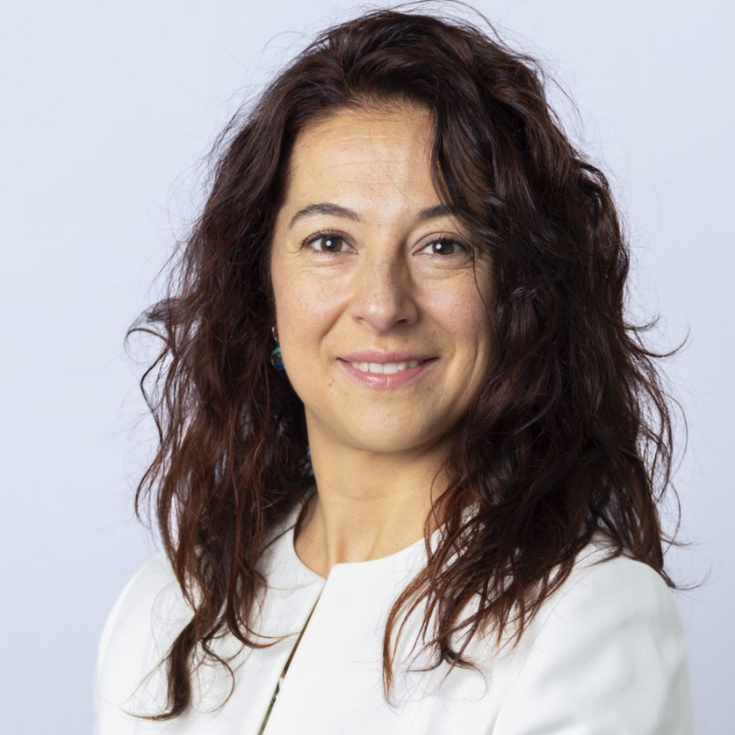
© Bernal Revert/ BR&U
Stefania Benaglia
With 15+ years of experience at the heart of EU foreign and security policy, Stefania advises EU institutions and global think tanks on strategic partnerships, with a focus on the Global Gateway, EU–Asia relations, and security and defence cooperation. As a frequent media commentator and public speaker, she briefs senior policymakers—including Members of the European Parliament, national governments, and G7-level interlocutors—on geopolitical developments, public diplomacy strategy, and multilateral engagement.
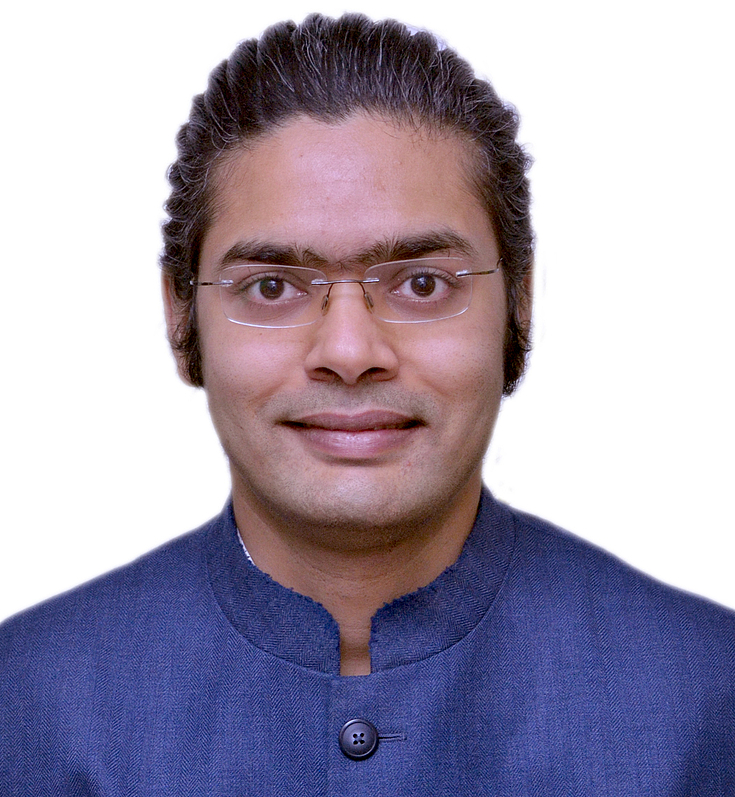
© Apurv Kumar Mishra
Apurv Kumar Mishra
Apurv Kumar Mishra is presently serving in the Government of India as a Consultant in the Prime Minister’s Economic Advisory Council. From February-June 2022, he was a Policy Leader Fellow at European University Institute in Florence, Italy. He previously worked as a senior research fellow at India Foundation, a premier think-tank in India where he led initiatives relating to Indian foreign policy. He is the editor-in-chief of India Law Journal.